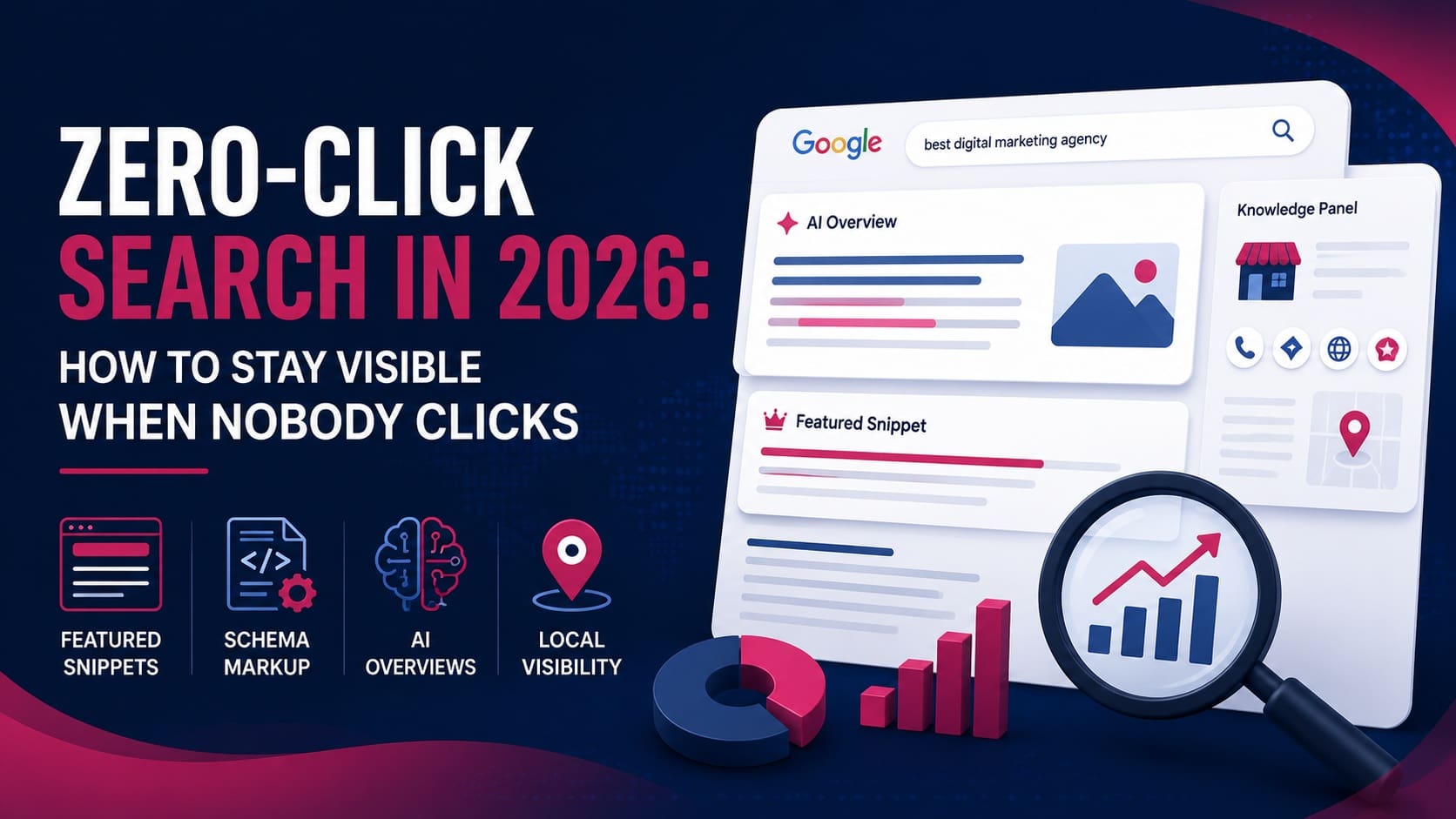
We will help the business owners & marketers understand what zero-click search actually is, why it is shaking up SEO in 2026, and most importantly what tangible steps they can implement to stay visible and win business even if customers never click through to their website.
Table of Contents
Zero-Click Search is the SEO or optimization of Featured snippets, AI Overviews, Answer Engine Optimisation (AEO), Schema markup or other SERP features like Google Business Profile for conversion increment or improved brand visibility without any click on the result.
Introduction
Search is not performing as businesses think it is.
The marketing goal of SEO for a number of years was simple: to get a high rank, get the click, and drive the visitor to your site. The model is coming apart.
According to this analysis of Similarweb clickstream data by SparkToro in 2026, nearly 68% of U.S. Google searches are now ending without clicking on any site. This represents an increase from approximately 58.5% two years before.
When Google shows an AI Overview the number gets even bigger. According to certain studies, zero-click rate for those queries is more than 80%.
This is a big change for companies. Ranking number one for a keyword will not guarantee you any visitors.
The question we must all grapple with by 2026 is not “how do we rank higher”. It’s “how do we stay visible, get cited and win business inside a search experience that doesn’t need a click.”
What does a Zero-click means?
A zero-click search is when a user types a query into Google, and their answer appears on the search results page. They never visit any websites by clicking.
It is possible due to this.
- An optimal answer.
- An information panel.
- A brief fact sheet.
- An AI summary like Google’s
- AI Overviews.
The answer to the user's question must be found right there. A search will finish without you ever hitting a business’s site.
A handful of examples
- A live clock pops up if you search "what time is it in London?"
- The phrase "15 USD to EUR" results in a currency converter.
- A search for what is zero-click search may now return a full AI Overview answer, meaning a question about this very thing may resolve with no click.
Why Do Zero-Click Searches Increase?
Various forces appear to be contributing to this. It's been around for years.
Knowledge panels and featured snippets were there before generative AI. They conditioned users to anticipate immediate responses directly on the results page.
Google searches will now show AI Overviews on considerable shares. According to data from Ahrefs, the top organic result sees click-through rates drop by about fifty percent.
This is further magnified by mobile behaviour. Mobile zero-click rates are much higher than desktop, since mobile searchers are even more likely to want an answer right now without landing on another page.
People searching for information are much more likely to result in “zero clicks” than people searching to buy – and not because of the exact match. For example, a “buy,” “near me,” or “pricing” query means that someone still wants to land on a real business page. However, an informational query for examples such as “what is” or “how to” or “when is” has no such business requirement.
That last point is the most important for strategy. Some searches are less at risk than others. Your blog content receives more exposure than your service-page and location-page content.
How to Optimize for a Zero-Click Universe
1. Aim for the featured snippet and do not resist it.
If Google is to answer the query directly, make sure it’s your answer being shown, with your brand name attached.
- Organize content in such a way that the direct answer appears in the first 40 to 60 words of the text right after a heading.
- Use easy language, followed by supporting detail.
- Make sure to use clear H2/H3 questions in your articles that people actually search for.
2. Make use of structured data and schema markup.
Schema markup describes to Google and AI systems exactly what your content refers to, not just what it says.
Types that are useful include:
- Frequently asked questions schema.
- How To schema.
- Article Framework.
- LocalBusiness structure.
- Review structured data.
Having structured data makes it more likely that the source the overview or answer engine pulls from and cites – even if the user never clicks.
3. Get good at answer engine optimization.
Answer Engine Optimization (AEO) is composing content in such a way that AI will accurately extract, understand and cite it.
That is to say:
- Complete answer blocks.
- Establishes clear facts.
- Unique data or proprietary insights (AI tools prefer original data over recycled).
- Use a design that AI crawlers can parse easily.
4. Win the Local, Transactional and High-Intent Queries
Content with information is impacted hardest by zero-click searches. Businesses should invest more.
- A Google Business Profile that is 100% optimized (hours, services, reviews, photos, Q&A). Many local zero-click searches this profile answers completely.
- Created for individuals who are not merely browsing, but are prepared to act.
- The creation of reviews, since the star ratings are now showing directly on the searches and influencing the decisions which happen even before the actual click on any link.
5. Assess Visibility, Not Just Clicks
If clicks are down across your industry, then judging your content by rate of click will make good work bad.
Change some reporting focus to:
- Impressions and average positioning within Google Search Console.
- Share the voice on your semantic topics. Are you showing in the snippet? The AI Overview? The Knowledge panel?
- Are people more frequently searching for your company name directly after they see you elsewhere?
6. Focus on overall subject area, not pages.
AI systems, including Google, increasingly prefer sources with consistent depth on the topic rather than a single optimized page.
When you consistently deliver in-depth articles with thorough information on your biggest (most important) service areas, it will likely build the kind of authority you want. You want to be cited, even in answers that never send a click.
Key Takeaways
- It is reported that 2/3 of all Google searches are zero-click searches, and this trend is accelerating due to AI Overviews filling users in with answers.
- Being number one in ranking doesn't guarantee traffic anymore. Instead, ranking visibility inside the answer itself has become more important.
- Transactional content or local intent content are lesser affected by zero-click than informational content.
- In order to stay visible in AI-generated answers, you must employ schema markup and answer engine optimization (AEO).
- Click-based success metrics must change to include impression count, visibility on SERP features, and growth in brand searches.
- You can turn visibility into business more effectively with local and transactional queries.
Frequently Asked Questions
What is a zero click search?
User can find their answers directly on Google page without additional clicks in a zero-click search. The AI Overview, knowledge panel, and featured snippets allow users to find essential information without having to click.
Is SEO dead due to zero-click searches?
No. It defines change for success in SEO meaning. Position and visibility still matter. The focus has changed from advertising that will earn clicks to advertising that will earn citations, brand impressions and trust at the point of search.
How can I determine if my site is impacted by a zero-click search?
Review Google Search Console. If your impressions are steady or increasing but your clicks and click-through rate are decreasing, a likely culprit is zero-click search, particularly AI Overviews.
Is schema markup required for visibility in AI searches?
It does help a lot. Structured data allows for Google and AIs to cite your data easily. This shows the importance of citation. Doing this increases the chance that they will reference you in an answer.
Which pages should you protect from zero-click loss?
Prioritize the optimization of pages such as services, locations, and contact. Visitors to your site are still needed to convert on these. They are significantly less vulnerable to zero-click loss than general informational blog content.
Are you prepared to adjust your SEO strategy for 2026?
Zero-click search is here to stay.
When the rest of the web is fighting over a smaller piece of clicks, those businesses that use visibility, structured data, and AI citation will be the ones still getting leads.
Reach out to us now for a complimentary technical SEO assessment and discover where your website truly stands in the zero-click era.