
Let's be honest. Search "ecommerce SEO tips," and you'll find dozens of articles telling you to "optimize your meta titles" and "build quality backlinks."
Table of Contents
The advice isn't wrong - it's just surface-level. If you're running a real store with real revenue on the line, you need to go deeper. We've worked with enough e-commerce clients at Auxilium Technology to know where the real problems live, and they're rarely what store owners expect when they first come to us.
Here's what's actually working in 2026.
BLOG OBJECTIVE
This blog helps e-commerce business owners and marketing decision-makers understand why their current SEO efforts may not be producing results and what a structured, expert-led e-commerce SEO strategy actually looks like in 2026. It positions Auxilium Technology as a credible, experienced partner for e-commerce SEO services, e-commerce website development, and long-term organic growth.
The Numbers First, Because They Matter
Organic search drives 43% of all e-commerce traffic—more than paid ads, social, and email combined. It converts at an average of 2.8%, which beats most paid channels outside of branded search.
Almost 60% of US shoppers now use tools like ChatGPT or Gemini while shopping. Global e-commerce sales are forecast to hit $6.4 trillion in 2026. The demand is there. The question is whether your store shows up when buyers are ready.
Understanding Types of E-commerce for Business Revenue
Before diving into SEO tactics, it helps to understand which e-commerce model your business operates under - because the SEO priorities shift depending on the answer.
The main types of e-commerce for business revenue are:
B2C (Business to Consumer) - Selling directly to end buyers. The most competitive space in organic search, where product page and category page SEO carry most of the weight.
B2B (Business to Business) - Longer buying cycles, more informational content needed, and keyword research that targets procurement and decision-maker queries rather than impulse-buy terms.
D2C (Direct to Consumer) - Brands selling their own products directly, bypassing retailers. Brand storytelling, review generation, and topical authority content matter enormously here.
Marketplace Sellers - Businesses selling on Amazon or Etsy alongside or instead of their own site. Own-site SEO becomes a way to reduce marketplace dependency and improve margin.
Each model has different SEO leverage points. A B2B store needs deep product specification content and comparison pages. A D2C brand needs strong review signals and buying guides. Knowing your model shapes every decision after it.
Why Most E-Commerce Stores Get SEO Wrong
Here's the pattern we see constantly: a store owner invests in SEO, gets some blog posts published, and six months later wonders why nothing has moved. The reason is almost always the same - they optimized the wrong things.
Blog posts about industry news don't sell products. Keyword-stuffed descriptions don't rank. And launching a backlink campaign while the site has hundreds of indexing errors is basically theater. The real problems are structural. They fall into a few predictable categories.
- Faceted navigation creates duplicate URLs.
Filters for size, color, and price generate thousands of near-identical URLs. Google burns its crawl budget on those useless filter pages instead of your actual product and category pages. Fixing this with canonical tags and proper robots.txt configuration moves the needle more than almost any content piece you could publish. - Manufacturer product descriptions.
Every competitor selling the same product is copying the same copy. Google has no reason to prefer your page. Start with your top 20% of products by revenue, write original descriptions for those first, and work down systematically. - Bare category pages.
A page that's just a grid of product thumbnails gives Google nothing to work with. A 150–200-word introduction above the grid - explaining who the products are for, what price range is covered, and what makes the selection different - is all it takes to give Google the context it needs.
Proven Ecommerce SEO Strategy for Sustainable Revenue Growth
Fix the Technical Foundation First
We've never run an e-commerce audit that didn't uncover something significant. Redirect chains from retired SKUs, canonical tags missing or pointing to the wrong URLs, and product pages accidentally set to no-index. Until you fix these, everything else you do is working against friction.
Our technical SEO work always starts here. Core Web Vitals matter too - Largest Contentful Paint under 2.5 seconds and mobile performance are both direct ranking factors. Mobile devices now account for 60% of e-commerce visits, and Google ranks your mobile site, not desktop.
Category Pages Are Your Highest-Leverage Asset
One well-optimized category page can rank for dozens of commercial keywords and funnel that traffic to individual products. It's the highest-ROI page type in an e-commerce site, and most stores neglect it.
What it needs: original intro copy, BreadcrumbList and ItemList structured data, internal links to buying guides and related categories, and product images that don't tank load speed. That combination is the core of solid category page SEO - and it's what separates stores that rank from those that don't.
Product Pages: Specificity Beats Comprehensiveness
The product page optimization mistake we see most often is writing for everyone and reaching no one. "Perfect for professionals, students, and gamers" tells nobody anything. "Built for designers who need color accuracy - covers 100% of the sRGB color gamut" speaks directly to the buyer who needs it.
That specificity is what drives both ranking (semantic relevance) and conversion (matched intent). Add a product schema with ratings, price, and availability - that's what puts star ratings and price indicators directly in the search results, increasing click-through before a buyer even reaches your page.
Your e-commerce website development decisions affect SEO more than you think.
The platform you build on and how it's built have a direct impact on what's possible with SEO. Poorly structured e-commerce website development-whether that's a slow theme, auto-generated duplicate URLs from the platform, or JavaScript rendering that blocks Googlebot—creates a ceiling on how well your SEO can perform, regardless of how good the content is.
Before committing to any major catalog expansion or site redesign, it's worth auditing the technical architecture first. The decisions made at build time are the hardest to fix after the fact.
Content That Actually Earns Authority
Buying guides for your top categories, comparison pages for "X vs Y" searches your buyers make, and FAQ content drawn from real customer questions - this is the e-commerce content marketing that builds topical authority over time. Each piece should link naturally to the relevant category and product pages.
This is also where link building connects with content strategy. A well-researched buying guide with original data has a realistic shot at earning links from industry publications. A keyword-stuffed product description does not.
How AI Search Is Transforming E-commerce
AI-powered search tools are changing how customers discover and evaluate products online. Instead of browsing multiple websites, shoppers now rely on AI-generated answers and recommendations to make faster purchasing decisions.
Key ways AI is impacting e-commerce:
- Faster Product Discovery – Customers find relevant products more quickly through AI-generated recommendations.
- Smarter Product Comparisons – AI helps shoppers compare features, pricing, and reviews in one place.
- Conversational Search – Users are asking detailed questions instead of searching with simple keywords.
- Personalized Recommendations – AI delivers results based on user intent and preferences.
- Increased Visibility Opportunities – Brands with well-structured, authoritative content are more likely to be cited by AI search tools.
As AI-driven search continues to grow, e-commerce businesses must optimize their content not only for Google rankings but also for AI-powered discovery platforms.
Why AI Search Matters for E-commerce Success
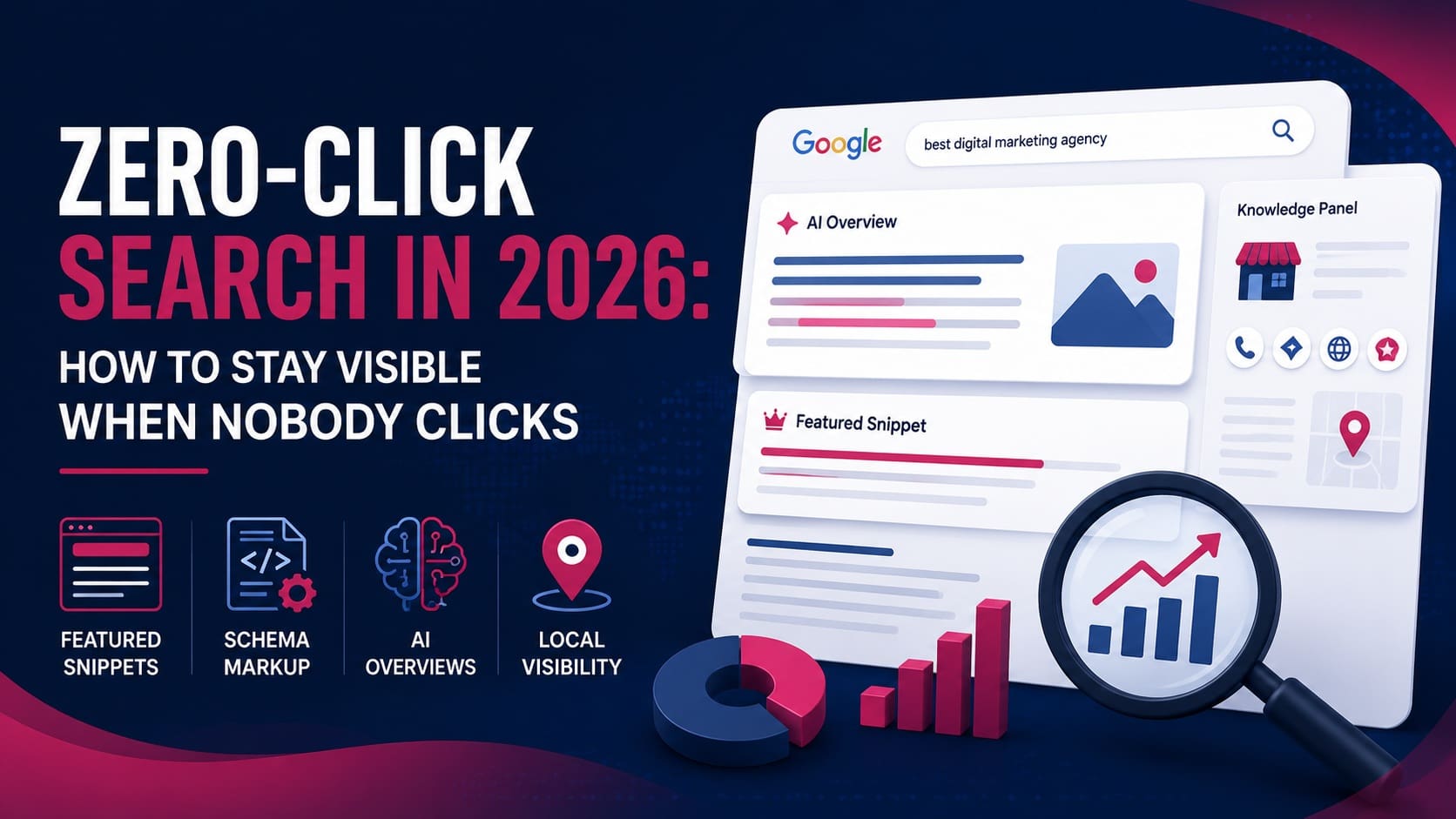
Nearly 60% of US shoppers use AI tools while shopping. Google AI Overviews, ChatGPT, and Perplexity are intercepting queries that used to go straight to organic results. Being cited in those answers matters.
What gets you cited: direct, extractable answers early in the content. Structured formats - tables, numbered lists, and FAQ sections. Genuine expertise signals - real author credentials, accurate data, and consistent quality. And an FAQPage schema so search engines can parse your Q&A content cleanly.
U.S. ad spend in generative AI search is projected to grow from $1 billion in 2025 to $26 billion by 2029. The brands building organic AI visibility now won't be scrambling to buy it later.
Why Professional E-commerce SEO Services Make a Difference
There's a gap between knowing what good e-commerce SEO looks like and having the bandwidth to execute it properly. Most store owners are running a business - they don't have time to manage crawl budgets, write 300 buying guides, and monitor schema validation errors simultaneously.
That's where professional e-commerce SEO services come in. Not just for the strategy, but for the consistent, systematic execution that compounds over time. The stores that grow organically aren't doing anything mysterious. They've got experienced people executing the fundamentals week after week, month after month.
Key Takeaways
- Organic search drives 43% of e-commerce traffic and converts better than most paid channels - it's the most durable growth channel available to an online store.
- Know your e-commerce model. B2C, B2B, D2C, and marketplace sellers each have different SEO priorities. Strategy should follow structure.
- Technical SEO comes first. Faceted navigation issues, duplicate content, and Core Web Vitals failures limit everything else you try to do.
- Category pages are the highest-leverage pages in your store - invest in them before anything else.
- Product descriptions need specificity. Speak to one buyer with precision rather than to everyone with vague claims.
- Your development decisions set the SEO ceiling. Platform choice and site architecture matter from day one.
- AI search is a current reality, not a future trend - structure your content to be extracted and cited by AI engines alongside traditional SEO.
- Consistent execution beats one-time fixes. Professional e-commerce SEO services deliver compounding results that a one-off project rarely achieves.
Frequently Asked Questions
What's the difference between e-commerce SEO and regular SEO?
E-commerce SEO deals with larger page volumes, faceted navigation creating duplicate content, and optimizing simultaneously for purchase intent and research intent. The technical complexity is higher, and the content strategy has to map more tightly to the buyer journey.
How long does e-commerce SEO take to show results?
Technical fixes can show impact in weeks. On-page changes typically move rankings in 6–12 weeks. Content and link authority compounds over 9–12 months. It's a long game - but one that keeps paying after you stop spending.
Should I do SEO or Google Ads?
Most mature stores do both. Ads for immediate traffic, SEO for compounding long-term growth. Organic search delivers an estimated 317% ROI with a 9-month break-even - hard to match with paid channels over a multi-year horizon.
How do I rank in AI search tools like ChatGPT?
Write content that directly answers questions, use structured formats, and build genuine authority signals. AI models cite sources they can parse easily and trust factually - which maps almost exactly to what Google's E-E-A-T guidelines have always rewarded.
Do product reviews affect SEO?
Yes - significantly. Reviews add unique content and keyword-rich language to product pages, enable rich snippets through aggregate rating schema, and signal freshness to Google. Pages with substantial real reviews consistently outperform those without.
Bottom Line
E-commerce SEO rewards the stores that do the structural work - fixing technical issues, writing specific and useful content, earning real backlinks - and stick with it long enough for the compounding to kick in.
If your store isn't where it should be in organic search, Auxilium Technology can help. From technical SEO audits to full e-commerce SEO strategy and local SEO - we're straightforward about what it takes and realistic about timelines.
Get in touch and let's talk about your store.