
Here's something nobody tells you when you're running marketing for a senior living community: the person typing into Google isn't the person who's going to live there. It's a son or daughter, probably stressed, probably doing this research at 11pm after a phone call from the hospital. That changes everything about how this content needs to work.
Table of Contents
The short version, if you're skimming:
- Your Google Business Profile matters more here than almost any other industry I've worked in
- You're writing for a caregiver, not a resident, and that's easy to forget
- Trust signals (reviews, licenses, actual staff names) carry weight because this is a health and money decision
- Content that just answers questions honestly beats anything that reads like a brochure
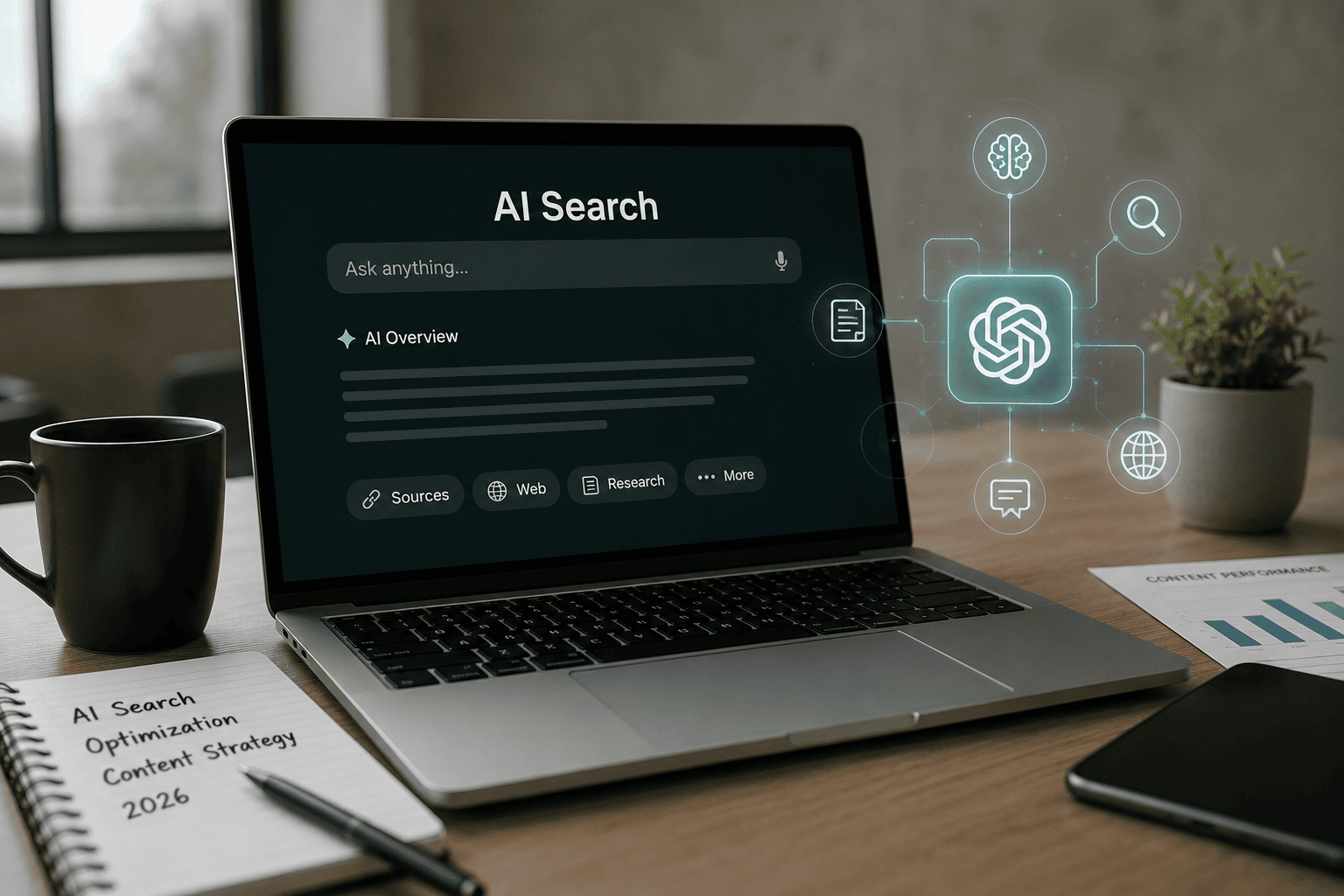
- ChatGPT and AI Overviews are now part of this research process, whether we like it or not
I'll be honest, most senior living websites still read like they were written for the resident. Photos of smiling people playing bingo, soft lighting, nice fonts. None of that answers the question an adult child actually has at 11pm, which is usually some version of "is this place safe and can we afford it." Get that part right and the SEO mostly follows. Our search engine optimization work always starts there, not with keywords.
What People Mean When They Say “Senior Living SEO”
It's showing up when someone searches for assisted living, memory care, nursing homes, or retirement communities in their area, specifically their area, not just ranking generally.
One thing that trips people up constantly: assisted living, memory care, and skilled nursing all get searched completely differently, with different fears attached. Someone Googling memory care options is usually scared about a parent's cognitive decline. Someone comparing independent living communities is thinking about lifestyle and cost. Lump them together on one generic page and you lose both.
How Families Actually Search Now
From what I've seen, it goes something like this: check the map, click a couple websites, then ask an AI assistant a follow-up question before ever picking up the phone.
- Pull up nearby options, glance at star ratings on the map
- Click into two or three sites, look for pricing hints, photos, care levels
- Ask ChatGPT something like "what's the difference between assisted living and memory care" because the websites didn't explain it clearly enough
- Call whichever place felt the most honest, not necessarily the fanciest
That third step keeps growing. If your site never plainly answers the question a family is asking, an AI tool has nothing of yours worth quoting back to them.
Why Local SEO Does Most of the Heavy Lifting
Families rarely look outside a 5 to 15 mile radius. That's not a guess, that's just how this decision usually works, proximity matters when you're planning to visit every week.
Which is why local SEO isn't optional here the way it might be for other businesses:
- The map pack's top three spots grab most of the clicks, ranking 5th barely matters
- Your name, address, and phone number need to match everywhere, your site, Caring.com, SeniorAdvisor, Yelp, mismatches quietly hurt you
- Reply to every review like a real human wrote it, families read these closely, a copy-pasted "thank you for your feedback" is obvious and it doesn't help
Honestly, fully building out your Google Business Profile, photos, hours, services, the Q&A section nobody bothers with, tends to move the needle faster than most of what's on this list combined.
Picking Keywords That Actually Match Intent
Start with care type plus city. Skip the broad industry terms that sound impressive in a strategy deck but don't match what anyone's actually typing.
| Where They Are | What They Type | What To Build |
| Just starting out | "signs it's time for assisted living" | Educational content, no sales pitch |
| Comparing options | "memory care vs assisted living cost" | Honest comparison and pricing pages |
| Ready to move forward | "assisted living near me" | City-specific service pages |
Don't skip home care in this either. A lot of families search for in-home help months before they're anywhere near ready to consider a move, and whoever answers that early question often gets the call later too.
One Article Won't Cut It
A single great blog post rarely does much on its own. What tends to work is covering a topic from a handful of different angles: a plain definition somewhere, a comparison page, an FAQ, maybe a real example from a client.
That kind of coverage doesn't happen by accident; it comes from an actual content production process running in the background, paired with regular blogging so the site keeps adding to that pool instead of going quiet for six months at a time.
Don't Ignore What Happens Off Your Site
Here's a stat that surprises most clients: brand-owned pages make up a pretty small slice of what AI tools actually cite. Reddit threads, review sites, and trade publications often carry more weight than a company's own blog.
- Chase guest posts and coverage through digital PR and link building on sites that already have AI's trust
- Keep your business listing accurate through ongoing Google Business Profile management
- Use the same brand name and description everywhere; inconsistency confuses these systems more than you'd think
- Go pitch journalists and bloggers directly instead of hoping they stumble onto you
Before You Hit Publish, Check This
- Does the answer show up in the first sentence or two, not buried?
- Is there at least one list or table breaking up the text somewhere?
- Are the claims backed by something specific, not "studies show"?
- If someone quoted this paragraph with zero context, would it still make sense?
- Has this page actually been touched in the last six months?
Mistakes We See Constantly
- Answer's there, just three paragraphs too late
- Adding schema and calling it done, without fixing the actual copy
- One good push at launch, then radio silence for a year
- Treating this as a "blog thing" and skipping service pages entirely
- Assuming AI search doesn't apply to local businesses, when local SEO queries are increasingly the ones showing up in AI Overviews first
How Auxilium Technology Fits Into This
None of this is a one-time project, honestly. It's closer to the maintenance work traditional SEO always required, just aimed at a different kind of reader now. We handle the technical audits, content rewrites, and schema work together because doing them separately rarely yields results worth mentioning.
Want a quick read on where you currently stand? Run your site through our free AEO Analyzer, or take a look at our case studies if you'd rather see what this has looked like for other clients first.
Questions People Actually Ask Us
What's AEO, in plain terms?
It's writing content so ChatGPT and similar tools can pull it out, trust it, and cite it without extra work on their end.
Will adding schema get me cited?
Not by itself. It helps the model understand your page correctly, but the writing still has to do the heavy lifting.
Should I just block these AI crawlers?
You can, but you're trading away visibility on that platform to do it. Most businesses don't want that trade.
How fast does this actually work?
Structural changes can show up within weeks. Real citation gains usually take a couple of months, since it depends on when these models re-crawl your pages.
Does this matter if I'm a small local business?
Yes, probably more than you'd guess. AI Overviews are now constantly answering "near me"- style questions, and if a competitor's page is structured better than yours, they get the mention.
If I only have time to fix one page this week, which one?
Whatever service page brings in the most leads. Rewrite the opening two sentences so they answer the exact question a customer would type. Everything else can follow after that.