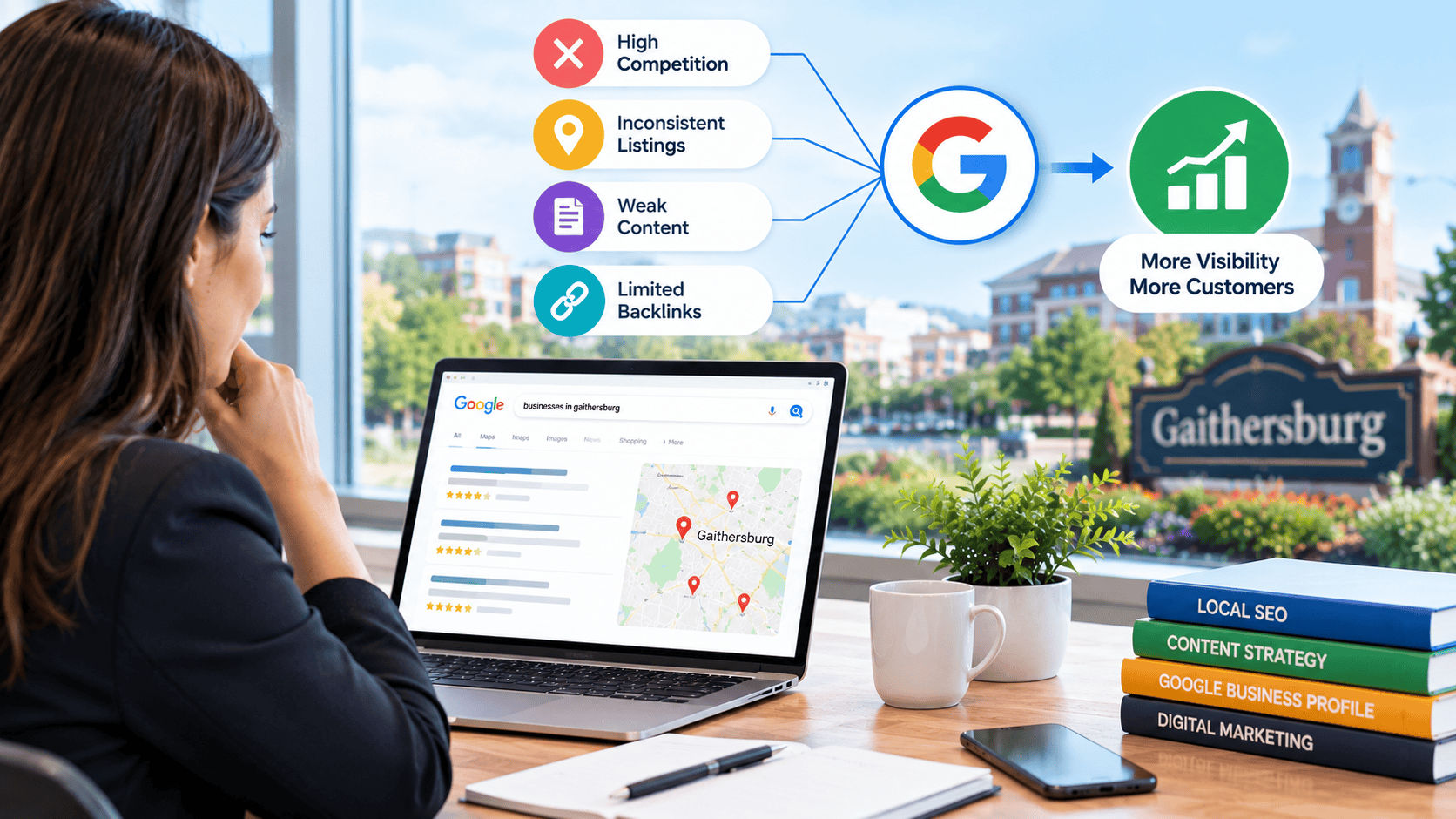


Ask ten lawyers what SEO means for their firm, and you'll get ten different, mostly wrong answers. Some think it's a one-time website fix. Others think it's just paying for ads. Law firm SEO is neither. It's the ongoing work of improving a firm's website, local listings, content, and technical foundation so people searching for legal help actually find the firm and, ideally, call it.
When it's done properly, that work pays off in a few connected ways: more organic visibility, stronger local search presence, traffic that's actually worth having, and consultation requests that don't require an ongoing ad spend to keep coming in.
Legal search is brutal competition, and most of it has a location baked into the intent. Nobody searches "divorce attorney" out of curiosity; they're already dealing with something, and they're close to picking up the phone. SEO for law firms isn't a matter of stuffing a homepage with keywords and hoping. It's local optimization, structured content, a technically sound site, and enough trust signals that a stranger feels comfortable calling a law office about the worst week of their year.
Table of Contents
Objective
-
This guide sets out to explain how law firm SEO works in practice and gives firms something to actually use to improve visibility. Visibility on Google, Google Maps, and the newer AI search tools clients are starting to rely on. The phrase doesn’t guarantee a ranking. It provides direct insight into the influencers.
What Is Law Firm SEO, Exactly?
Legal SEO encompasses several elements that can help law firms increase the amount of traffic coming to their website. These fundamental elements include keyword research, on-page optimization, local SEO for law firms, technical SEO, content, internal linking, and backlinks. In addition to these main elements, there are also authority, a properly managed Google Business Profile, trust signals, and more recently, how the firm shows up in AI search tools. If you skip a component, others will underperform.
Why This Actually Matters for Law Firms
"Family lawyer in Rockville" and "what does a family lawyer do" look similar on the surface, but they're not the same search at all. The first person is hiring soon. The second is still researching. Firms that rank for the high-intent, local version of these searches get seen before a prospective client has even dialed a number, which does two things at once: it cuts reliance on paid ads over time, and it builds a little bit of trust before that first call ever happens.
Building an Actual Strategy
Start with keyword research that's grouped by practice area, location, and intent, not one broad term everyone's fighting over. "Personal injury attorney" paired with the specific cities a firm serves will outperform chasing "lawyer" on its own almost every time.
From there, build dedicated practice-area pages instead of one crowded "Legal Services" page trying to cover everything. A firm doing personal injury, family law, and estate planning needs three separate pages, each one explaining the service, who it's for, roughly what the process looks like, a few honest FAQs, attorney info, and a clear way to reach out.
On-page SEO: Titles, headings, meta descriptions, internal links, and a structure that's actually readable should read like it was written for a person first. Keyword stuffing is easy to spot and doesn't fool anyone anymore, least of all Google.
For most firms, local SEO is where the real leverage sits. That means a Google Business Profile that's actually filled out correctly: right category, accurate services, current hours, real photos, reviews someone's responding to, plus consistent NAP (name, address, phone number) across the website, legal directories, and social profiles. And it means location content that says something real about the area, not just a city name dropped into an otherwise identical paragraph.
Content and E-E-A-T go hand in hand here. Enhancing relevance is possible by responding to real client queries, but a legal website needs attorney bios, visible credentials, and clear authorship to earn any trust at all, and none should ever drift into actual legal advice. Since rules for advertising and professional conduct differ by state and bar association, anything published is worth a compliance check before going live.
Next comes the less glamorous part: technical SEO. Your page should not have any issues with speed, mobile usability, crawlability, or HTTPS, and the sitemap should not be a mess. Information in a data format, as illustrated in the LegalService or FAQ schema, where it applies, helps search engines to understand the site but does not rank a page on its own.
Where AI Search Fits In
AI search optimization isn't a replacement for everything above; it's built on top of it. Content that gives a direct answer, uses real headings, cites something credible, and stays consistent across the web tends to be what ChatGPT, Gemini, and Google's AI Overviews actually pull from. There's no trick that guarantees a spot in an AI-generated answer, but strong AI search optimizationstarts from exactly the same fundamentals as good traditional SEO. It's not a separate discipline so much as an extension of one.
What This Looked Like for LVG Law Firm
Numbers are more convincing than theory, so here's one real example. Auxilium Technology's published case study on LVG Law Firm shows a 71% improvement in average Google position, a 173% jump in website visits, a 453% increase in leads, and a 5.8% bump in conversion rate. Those numbers belong to that one engagement; they're not a promise of what another firm will see, but they're a fair picture of what local SEO, content, and technical fixes can add up to when they're done together instead of piecemeal. The full LVG Law Firm case study has the rest of the detail.
Auxilium Technology works with law firms on digital marketing services for lawyers: keyword research, on-page and technical SEO, content, authority building, and Google Business Profile optimization. If your firm's SEO feels more like a scattered effort than an actual plan, that's usually the first thing worth fixing: assessing where things stand now, then building around the practice areas and locations that matter most.
Key Takeaways
- Law Firm SEO is local optimization, content, technical health, and trust signals working together, not one tactic doing all the work.
- High-intent local searches convert far better than broad, generic ones.
- Separate practice-area pages beat one catch-all services page, almost always.
- Google Business Profile accuracy and NAP consistency carry more weight for local firms than most people expect.
- Legal content needs to build trust without wandering into actual legal advice.
- AI search visibility runs on the same fundamentals as traditional SEO; there's no separate shortcut.
Rankings are a signal, not the finish line. Consultation requests and qualified leads are what actually count.