

A page can rank first on Google and still never get mentioned inside a ChatGPT answer. That gap is exactly what's tripping up a lot of otherwise solid SEO strategies right now. AI tools don't just rank content; they select it, quote it, and sometimes skip it entirely in favor of a less "optimized" page that simply answers the question more cleanly.
Table of Contents
That selection process is what people mean by an LLM citation, and it's quickly becoming its own visibility channel, separate from rankings. This guide breaks down what actually earns a citation, how large language models weigh your content, and the specific moves that move the needle.
Objective of This Blog
This is written for SEO professionals, content marketers, and business owners who want a practical, no-fluff path to AI visibility. By the end, you'll understand how large language models pick their sources and have a concrete list of strategies to start applying on your own site this week.
What Is an LLM Citation, Exactly?
An LLM citation happens when an AI model references your page, brand, or data directly while generating an answer. Sometimes it comes with a link. Sometimes it's just your name attached to an idea, with no click required at all.
This is worth separating from a plain brand mention, which is when your name shows up without being tied to a specific source. Citations carry more weight because the model is explicitly pointing to you as the source of the information.
What Actually Determines Whether a Page Gets Cited?
There's no published rulebook here, but a few patterns show up consistently across AI-generated answers:
Extractability — can a clean, standalone sentence be lifted from the page without losing meaning?
Verifiability — does the claim have something backing it up, or is it just asserted?
Visible credibility — is there a real author, a recent update date, and a business behind the content?
Topical focus — does the page do one job well, or is it trying to cover five ideas at once?
Domain authority footprint — does the wider site have the backlinks and trust signals that usually correlate with being cited more often?
None of these work in isolation. A page can check every box on the list and still get skipped if a competitor answered the same question with less friction.
Does Structured Data Actually Help You Get Cited?
Yes, but not in the way most people assume. Schema markup, built using the vocabulary at Schema.org, helps AI systems interpret what a page is and who's behind it. It reduces ambiguity. It does not force a citation on its own.
Start with the basics: Article schema with author and publish date, Organization schema on your homepage, and FAQPage schema only where the content genuinely matches real questions. Skip decorative markup that doesn't reflect what's actually on the page; mismatched schema tends to hurt more than no schema at all.
How Do Content Clusters Change Your Citation Odds?
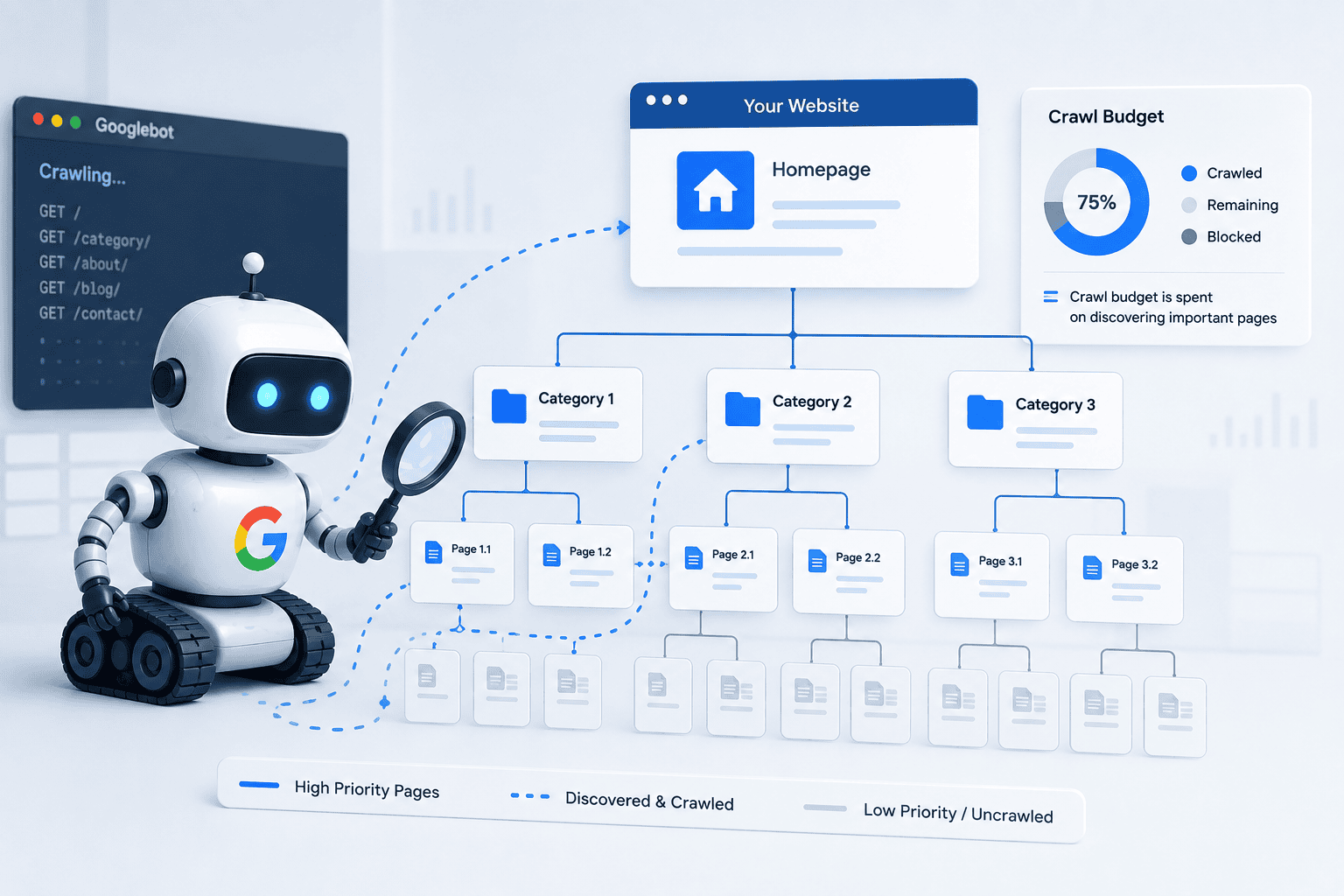
A single blog post rarely becomes the "default" source for a topic. A cluster does. That means one pillar page supporting several narrower articles, all linked together with consistent terminology.
Clusters help because they give a model one clear, canonical page to point to instead of three competing posts that all say roughly the same thing. If your own content is splitting attention across near-duplicate pages, you're working against yourself before an AI model even gets involved.
A simple version of this looks like:
- Pillar: a core guide on your main topic
- Supporting pages: narrower articles on specific sub-questions, each linking back to the pillar
Which On-Page Changes Actually Move the Needle?
If you're short on time, prioritize these before anything else:
Turn vague headings into real questions. A header like "Benefits" tells a model nothing. "What Are the Benefits of Local SEO?" tells it exactly what the section answers.
Answer the question in the first sentence or two, then expand with detail underneath.
Back up claims that matter with a real source instead of confident-sounding assertions.
Keep each page scoped to one job. Split sprawling pages into a pillar and supporting cluster articles.
Make credibility visible: a named author, a last-updated date, and clear business information.
How Do You Actually Check Whether You’re Getting Cited?
Ask the AI tools directly. Run the same handful of industry-relevant questions through ChatGPT, Gemini, and Perplexity every month or so, and note which domains keep showing up. Look at where the cited information lives on the winning pages: a definition box, a table, an FAQ, and borrow that structure for your own content.
This isn't a scientific experiment. Phrasing and timing shift results. But patterns do emerge if you check consistently instead of once and forgetting about it.
Common Mistakes That Quietly Kill Citations
- Long sections with no single sentence that could stand alone as a quote
- Repeating a keyword instead of actually adding new information
- Confident claims with nothing backing them up
- Schema that describes content the page doesn't actually contain
- Several pages are all competing for the same core concept
Checklist: Is Your Page Citation-Ready?
Structure
- Headings are phrased as real questions
- Each section opens with a direct answer
- Definitions appear early, in plain language
Trust
- Named author with real credentials
- Visible "last updated" date
- Claims that matter are backed by a source
Architecture
- One canonical page per core topic
- Supporting pages link back to the pillar
- No two pages are competing for the same concept
Traditional SEO vs. LLM Citation Optimization
|
Factor |
Traditional SEO |
LLM Citation Optimization |
|
Core currency |
Backlinks |
Verifiable, extractable content |
|
Primary goal |
Rank on a results page |
Get quoted inside an AI answer |
|
Content shape |
Keyword-optimized pages |
One scoped answer per page |
|
Success metric |
Rankings, organic traffic |
Citation frequency across AI tools |
Where Is AI Search Actually Headed?
ChatGPT, Gemini, Claude, and Perplexity are all converging on the same idea: a single synthesized answer instead of a results page. We compared how these platforms actually differ in our AI platform comparison, which is worth a look if you're deciding where to focus first. Expect this shift to accelerate, not slow down, as more everyday questions get answered without a click at all.
Key Takeaways
- A citation and a ranking are two different outcomes. You can have one without the other.
- Content that answers a question in the first sentence gets extracted more reliably than content that builds up to it.
- Structured data clarifies meaning; it doesn't guarantee a citation on its own.
- One well-scoped page usually outperforms three overlapping ones covering the same idea.
- Verifiable claims, backed by real sources, get reused more than confident-sounding but unsupported statements.
How Auxilium Technology Supports AI Visibility
Earning citations rests on the same foundation as strong SEO always has. Our team builds that foundation through our core SEO strategy work and a full range of digital marketing services that cover schema, content structure, and entity clarity together rather than as separate add-ons. You can see how this has played out for real clients in our client case studies. If you're curious where your own site currently stands, get in touch with our team, and we'll take a look.
Frequently Asked Questions
Do citations replace rankings?
No. Rankings still drive clicks for transactional searches. Citations add a separate layer of visibility for answer-first queries where a user may never see a results page at all.
Does schema guarantee a citation?
No. It clarifies meaning and reduces ambiguity, but selection still depends on relevance, evidence, and trust.
What's the fastest change I can make today?
Rewrite your headings as real questions and answer them in the first sentence underneath. It's a small edit with an outsized effect on extractability.
Why do topic clusters help more than single posts?
They give AI models one clear, canonical page to point to instead of several overlapping ones splitting the same authority.
Can a small business realistically compete for citations?
Yes. Clear, well-sourced, single-purpose pages often beat larger sites publishing broad, unfocused content.
Conclusion
Getting cited by an AI model isn't about chasing a new trend. It's about making your content easier to extract, easier to verify, and easier to trust than the next page in line. Start with one topic, tighten the structure, back up your claims, and give it a few months to show up in how often your brand gets mentioned.