
In today’s digital world, homeowners and commercial clients almost always turn to Google when they need a plumber or HVAC professional. That means search visibility isn’t just a nice-to-have—it’s essential for generating leads, increasing bookings, and beating your competition. A structured SEO (Search Engine Optimization) strategy helps your business show up when and where your potential customers are searching.
Table of Contents
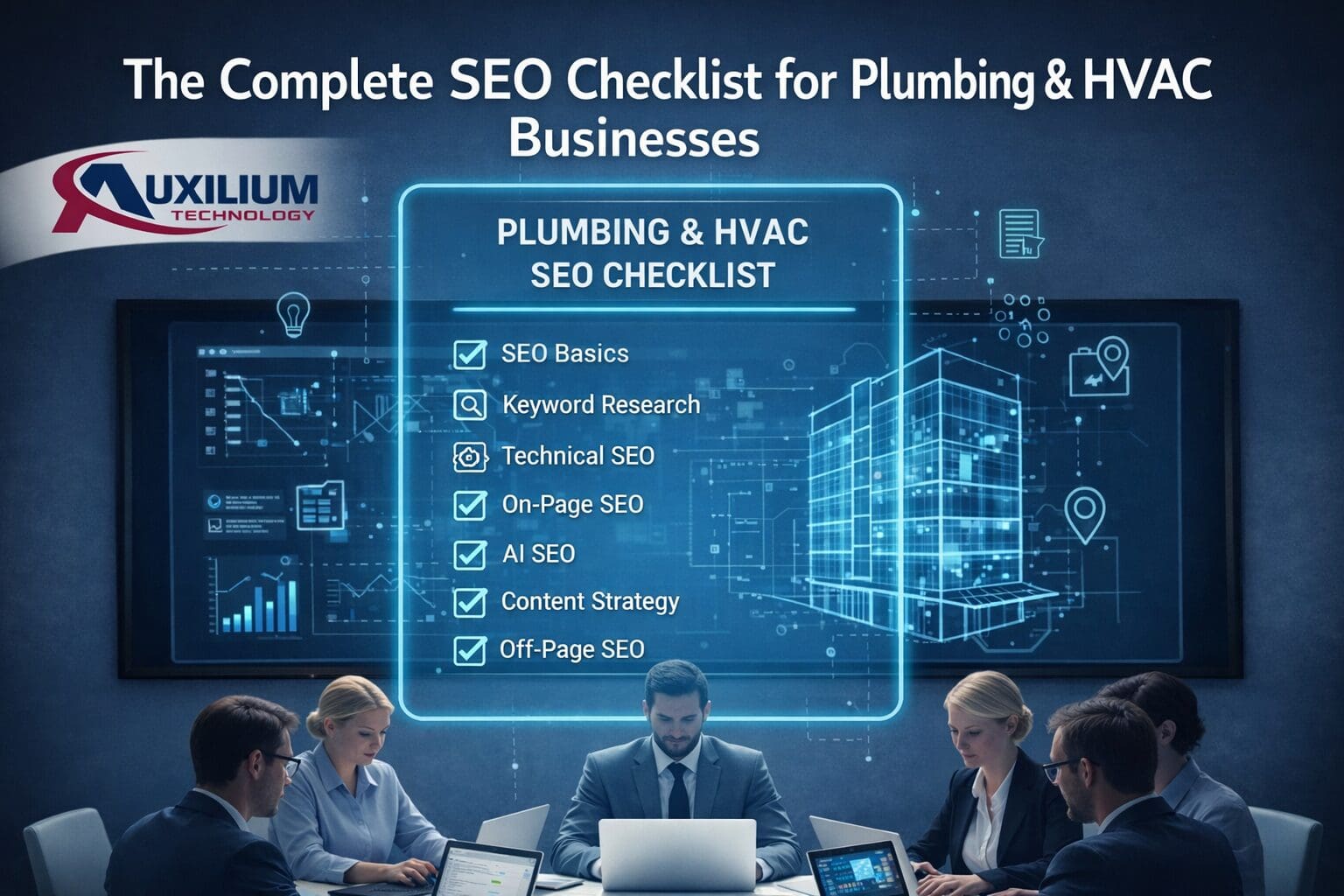
Below is a comprehensive SEO checklist specifically for plumbing and HVAC companies that’ll guide your optimization efforts, improve search rankings, and help you attract more qualified traffic. This checklist is inspired by proven industry practices and frameworks used by SEO professionals.
1. SEO Basics: Build a Strong Foundation
Before anything else, make sure your site is ready for SEO success:
- Set up Google Search Console and Google Analytics to track performance.
- Install an SEO plugin (like Yoast or Rank Math) if you use WordPress.
- Configure your XML sitemap and submit it to search engines.
- Ensure your robots.txt file allows search engine crawling.
- Use HTTPS and eliminate any security warnings on your site.
2. Keyword Research: Know What Your Customers Search For
Healthy keyword research helps you target phrases your potential clients are actually using:
- Map out core service keywords (e.g., “emergency plumbing near me”, “AC repair HVAC contractor”).
- Include long-tail and location-specific terms (e.g., “furnace repair Frederick MD”).
- Understand search intent (informational vs. commercial).
- Use tools such as Google Keyword Planner, Ahrefs, or SEMrush to prioritize keywords by search volume and difficulty.
3. Technical SEO: Make Your Site Crawlable & Fast
Technical health is the backbone of SEO—it ensures Google can find and index your content:
- Confirm your site loads quickly and is mobile-friendly.
- Fix broken links and redirects.
- Optimize your site architecture with clean URLs.
- Implement schema markup (especially LocalBusiness and FAQ structured data).
- Track and improve Core Web Vitals for better rankings.
4. On-Page SEO: Optimize Each Page
Every page should be clearly optimized with your target keywords and user intent in mind:
- Include your primary keyword in page titles, meta descriptions, and headers.
- Write unique, helpful content that answers customer questions.
- Use internal links to guide users to service pages and contact forms.
- Optimize images with compressed files and descriptive alt text.
- Add strong CTAs (call-to-actions) in relevant areas.
5. Content Strategy: Build Authority & Relevance
Content is what connects you to search traffic and builds trust:
- Publish blog posts addressing common questions (e.g., “How often should Plumbing be serviced?”).
- Create location-specific landing pages for areas you serve.
- Address both commercial and residential keywords.
- Update old content and expand posts to maintain relevance.
6. Local SEO: Dominate Your Service Areas
Most plumbing and HVAC searches are location-based. “Businesses looking to improve local visibility can benefit from specialized plumbing SEO Maryland strategies designed to attract high-intent customers and increase service bookings.”Your local SEO strategy should include:
- A fully optimized Google Business Profile (GBP).
- Consistent NAP (Name, Address, Phone) details across directories.
- Regular Google Business posts and updates.
- Proactive review management: encourage customers to leave reviews and respond to them.
- Creating local citations on trusted business directories.
7. Off-Page SEO: Build Trust Signals
Off-page SEO helps establish your authority and convince Google that your business is reputable:
- Earn backlinks from industry websites and local chambers of commerce.
- Share your best content on social media.
- Collaborate with complementary local businesses for referrals and mentions.
- Monitor your backlink profile and disavow spammy links.
8. Tracking & Maintenance: Keep Improving
SEO isn’t “set it and forget it”—you need to monitor and adjust over time:
- Review performance monthly (rankings, traffic, calls).
- Conduct a deep SEO audit quarterly to find new opportunities.
- Update your keyword list and content as search trends evolve.
- Automate routine tasks where possible (e.g., posting, reporting).
Conclusion: Stay Organized & Focused
Implementing a structured SEO plan ensures you’re ticking off the most impactful tasks first and not leaving any opportunities on the table. Whether you're a local plumber or an HVAC pro, following this checklist helps build a sustainable online presence, increases visibility in search engines, and generates more leads worth converting.
Start with the basics, measure results, and refine your approach as you grow. Consistency is the key to long-term SEO success!