
In today’s rapidly evolving digital world, programming languages play a crucial role in shaping modern applications, automation systems, and intelligent software solutions. Among them, Python has become one of the most powerful, beginner-friendly, and widely adopted programming languages across industries. From startups to large enterprises, Python continues to drive innovation due to its simplicity, flexibility, and scalability.
Table of Contents
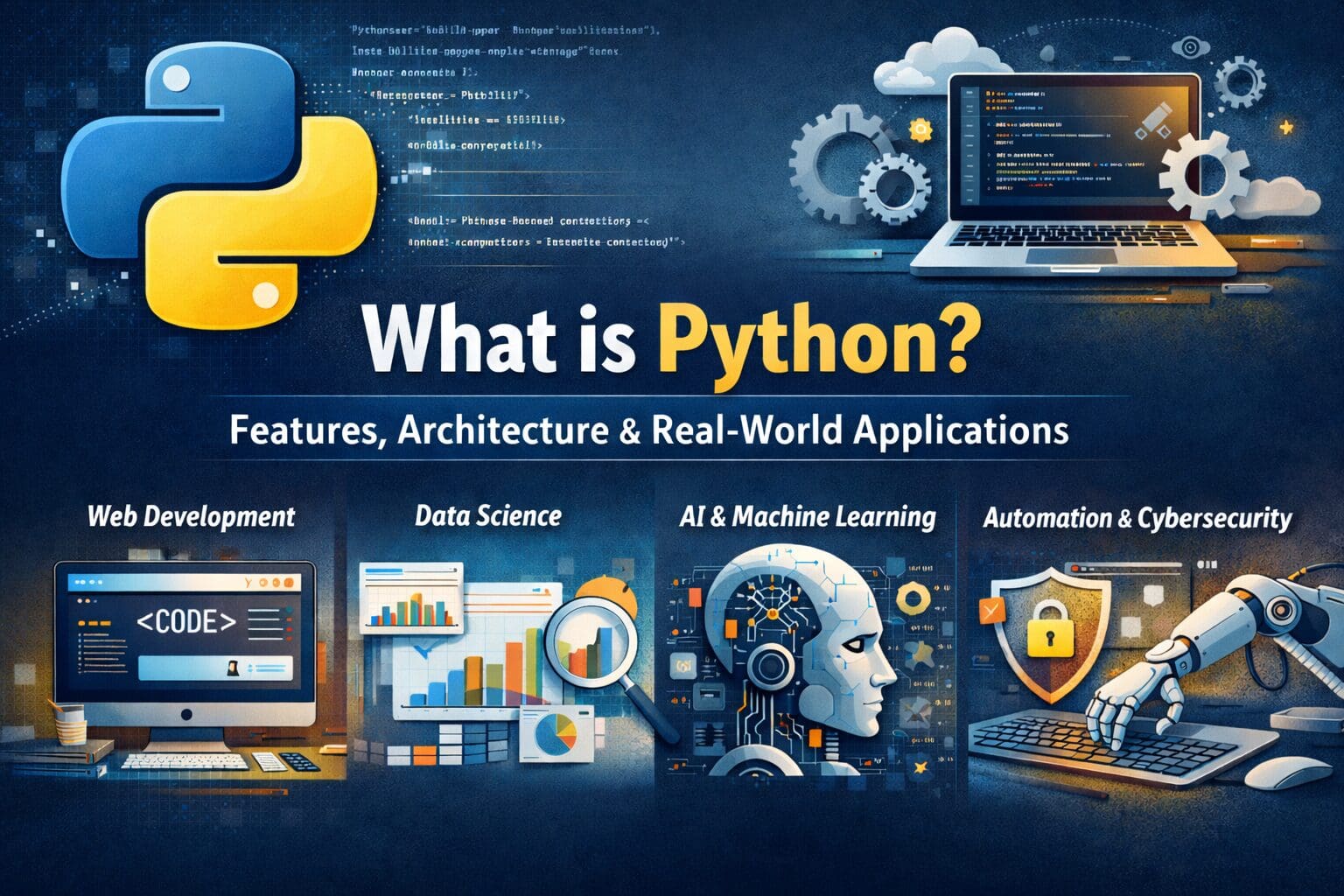
This blog explores what Python is, its core features, architecture, and real-world applications that make it a preferred choice for developers and businesses worldwide.
What is Python?
Python is a high-level, interpreted programming language created by Guido van Rossum and released in 1991. It was designed with the goal of making code readable, simple, and efficient. Python supports multiple programming paradigms, including object-oriented, procedural, and functional programming, making it extremely versatile.
One of the biggest advantages of Python is its clean and easy-to-understand syntax. Developers can write complex programs using fewer lines of code, which improves productivity and reduces errors. This simplicity has contributed significantly to its global popularity.
Key Features of Python
Below are some of the most important features that make Python stand out:
1. Simple and Readable Syntax
Python’s syntax resembles natural English, making it easy to learn and write. Its clean structure allows developers to understand and maintain code efficiently. Compared to many other programming languages, Python enables developers to achieve complex functionality with fewer lines of code, improving overall productivity.
2. Interpreted Language
Python is an interpreted language, meaning the code is executed line by line rather than compiled all at once. This approach makes debugging easier and faster because errors can be identified during execution. It also supports rapid development and testing cycles, making it ideal for startups and agile teams.
3. Object-Oriented Programming Support
Python fully supports object-oriented programming concepts such as encapsulation, inheritance, polymorphism, and abstraction. These principles help developers create modular, reusable, and scalable software systems. By organizing code into classes and objects, large applications become easier to manage and expand.
4. Extensive Libraries and Frameworks
Python provides a rich ecosystem of built-in libraries and third-party frameworks. For web development, frameworks like Django and Flask simplify backend development. For data analysis, libraries such as NumPy and Pandas help manage and analyze complex datasets efficiently. This vast ecosystem reduces development time and enhances performance.
5. Cross-Platform Compatibility
Python works seamlessly across different operating systems such as Windows, macOS, and Linux. Applications built with Python can be deployed across platforms with minimal modifications, ensuring flexibility and wider usability.
6. Automatic Memory Management
Python includes a built-in memory management system that handles garbage collection and dynamic memory allocation. This reduces the burden on developers and minimizes memory-related errors, leading to more stable applications.
Python Architecture Explained
Understanding Python’s architecture helps explain how it executes programs efficiently.
1. Source Code
Developers write Python programs in .py files using its clean syntax.
2. Bytecode Compilation
When a Python program runs, the interpreter first converts the source code into bytecode. Bytecode is a platform-independent intermediate representation of the program.
3. Python Virtual Machine (PVM)
The bytecode is executed by the Python Virtual Machine. The PVM acts as the runtime engine, processing instructions and converting them into machine-level operations. This layered execution model makes Python portable and efficient.
4. Memory Management
Python automatically manages memory through reference counting and garbage collection. This simplifies development and ensures optimal performance.
Overall, Python follows an interpreted and modular architecture that balances flexibility, performance, and ease of development.
Real-World Applications of Python
Python’s versatility allows it to be used across various industries and technological domains.
1. Web Development
Python is widely used to build dynamic and secure web applications. Frameworks like Django and Flask help developers create scalable websites, APIs, and enterprise platforms efficiently.
2. Data Science and Analytics
Python is one of the most preferred languages for data science. It enables data analysis, visualization, and predictive modeling. Businesses use Python to make data-driven decisions and improve operational efficiency.
3. Artificial Intelligence and Machine Learning
Python plays a dominant role in AI and machine learning development. It is used to build chatbots, recommendation systems, image recognition tools, and predictive analytics models.
4. Automation and Scripting
Python helps automate repetitive tasks such as file handling, web scraping, report generation, and system monitoring. Automation improves productivity and reduces manual effort.
5. Cybersecurity
Security professionals use Python for ethical hacking, vulnerability analysis, and penetration testing. Its scripting capabilities allow quick development of security tools.
6. Game Development
Python is also used for developing simple games and prototypes, making it suitable for beginners entering game development.
Why Businesses Choose Python
Organizations prefer Python because it offers faster development cycles, lower costs, strong community support, and excellent scalability. It integrates well with modern technologies like cloud computing, artificial intelligence, and big data solutions.
Many forward-thinking companies are focusing on Energizing Software Development with PYTHON to build powerful, scalable, and future-ready applications that meet evolving market demands.
Additionally, businesses that rely on structured PHP frameworks also benefit from Energizing Software Development with cakephp, especially when building robust web applications within PHP-based ecosystems.
Conclusion
Python has transformed the software development landscape with its simplicity, flexibility, and powerful ecosystem. Its clean syntax, scalable architecture, and diverse real-world applications make it one of the most valuable programming languages today.
Whether it’s web development, AI, automation, or data analytics, Python provides reliable and efficient solutions for businesses of all sizes.
At Auxilium Technology, we leverage modern technologies and innovative development strategies to deliver high-performance digital solutions tailored to business needs. By combining expertise, scalability, and strategic implementation, we help organizations build future-ready applications that drive long-term growth and success.