

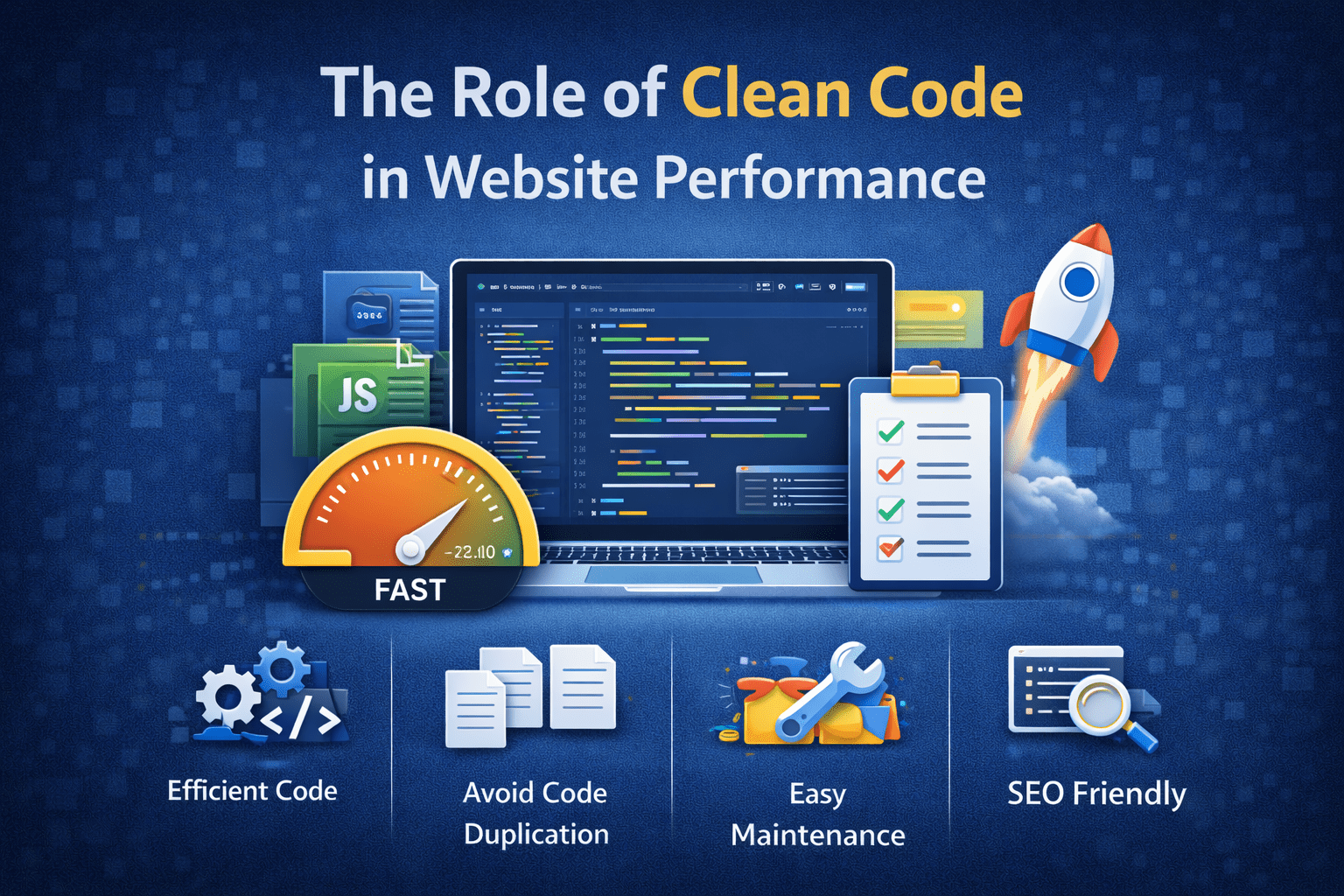
In today’s digital landscape, website performance plays a crucial role in delivering a positive user experience. A slow or poorly structured website can drive visitors away, negatively impact search engine rankings, and reduce business conversions. While many factors influence website performance—such as hosting, caching, and optimization—clean code is one of the most fundamental elements behind a fast and efficient website.
Table of Contents
Clean code refers to writing code that is well-structured, easy to read, maintainable, and optimized for performance. When developers follow clean coding practices, websites become faster, more scalable, and easier to update. This article explores the importance of clean code and how it directly affects website performance.
What is Clean Code?
Clean code is code that is simple, organized, and easy to understand. It follows consistent naming conventions, logical structure, and clear formatting so that other developers can quickly understand and maintain it.
Clean code emphasizes:
- Readability
- Simplicity
- Efficiency
- Maintainability
- Scalability
When developers write clean code, they minimize unnecessary complexity and ensure that every part of the program has a clear purpose.
How Clean Code Improves Website Performance
Many developers focus on design and functionality but overlook how the quality of code impacts performance. Clean code directly affects how efficiently a website loads, processes data, and interacts with users.
1. Faster Loading Speed
One of the biggest benefits of clean code is improved website speed. When code is well-structured and free from unnecessary elements, browsers can process it faster. Redundant scripts, unused functions, and poorly written logic increase the amount of work required for the browser to render a webpage.
Clean code reduces unnecessary processing, which results in faster page load times. Faster websites provide better user experiences and also perform better in search engine rankings.
2. Better Maintainability
Websites often require updates, new features, and security improvements. Clean code makes these changes easier to implement because developers can quickly understand the structure of the program.
If the codebase is messy or overly complicated, even small updates can take hours or days to implement. Clean code ensures that teams can work efficiently and maintain the website without breaking existing functionality.
3. Improved Scalability
As websites grow, they must handle increased traffic, new features, and additional integrations. Clean code allows developers to scale applications more easily.
For example, when developers follow modular programming principles, they can update individual components without affecting the entire system. This structured approach allows businesses to expand their websites while maintaining performance and stability.
4. Reduced Bugs and Errors
Poorly written code often leads to unexpected errors, security vulnerabilities, and performance issues. Clean code reduces these risks by promoting clear logic and proper error handling.
By organizing code properly and following consistent coding standards, developers can detect potential issues early and prevent major performance problems. This ultimately results in a more reliable and secure website.
5. Improved Collaboration Between Developers
Modern web development often involves teams of developers working on the same project. Clean code makes collaboration much easier because everyone can understand the structure and purpose of the code.
When developers follow clear naming conventions, consistent formatting, and proper documentation, team members can quickly contribute to the project without confusion. This leads to faster development cycles and improved productivity.
Clean Code Practices for Better Website Performance
Developers follow several best practices to maintain clean and efficient code. These practices not only improve readability but also enhance website performance.
Use Meaningful Variable and Function Names
Using descriptive names for variables and functions helps developers understand the purpose of each component. Clear naming reduces confusion and improves code readability.
Avoid Code Duplication
Duplicate code increases the size of the program and makes maintenance more difficult. Developers should create reusable functions and modules instead of repeating the same logic multiple times.
Keep Functions Small and Focused
Functions should perform a single task and remain concise. Smaller functions are easier to test, debug, and optimize, which improves overall performance.
Follow Proper Code Structure
Organizing code into logical sections such as controllers, models, and services improves maintainability. Frameworks that follow structured development patterns help developers maintain clean code.
For instance, many web developers focus on Energizing Software Development with CODEIGNITER, a lightweight PHP framework known for its simplicity and organized structure. CodeIgniter encourages developers to write efficient and structured code, which ultimately improves website performance.
Write Readable and Well-Documented Code
Documentation and comments help explain complex logic and make it easier for developers to understand the code later. While excessive comments should be avoided, clear explanations improve long-term maintainability.
The Relationship Between Clean Code and Modern Programming
Clean coding principles are widely used across different programming languages and frameworks. Developers working with object-oriented programming, for example, rely heavily on structured and organized code.
Concepts such as classes, inheritance, and modular design help developers create reusable components that improve both performance and scalability. Learning programming concepts like Understanding OOP in Python with Practical Examples allows developers to better organize their code and build efficient systems.
Object-oriented programming encourages clean architecture, which helps developers create applications that are easier to manage and optimize over time.
Clean Code and SEO Performance
Clean code does not just improve technical performance—it also affects search engine optimization (SEO). Search engines prefer websites that load quickly, function smoothly, and provide a seamless user experience.
When code is optimized and lightweight, pages load faster and perform better across devices. This can lead to improved search engine rankings, lower bounce rates, and increased user engagement.
For businesses relying on online visibility, clean code becomes an essential part of both development and digital marketing strategies.
Conclusion
Clean code plays a vital role in improving website performance, maintainability, and scalability. By writing structured, efficient, and readable code, developers can create faster websites that provide better user experiences and long-term reliability.
Practices such as avoiding duplication, maintaining clear structure, and following coding standards help developers build high-performing web applications. Whether working with modern frameworks or applying object-oriented programming principles, clean code remains a key factor in successful website development.
Organizations that prioritize clean development practices can build websites that are faster, more secure, and easier to manage. Companies like Auxilium Technology focus on implementing efficient coding standards and modern development strategies to create high-performance digital solutions that help businesses grow in today’s competitive online environment.