

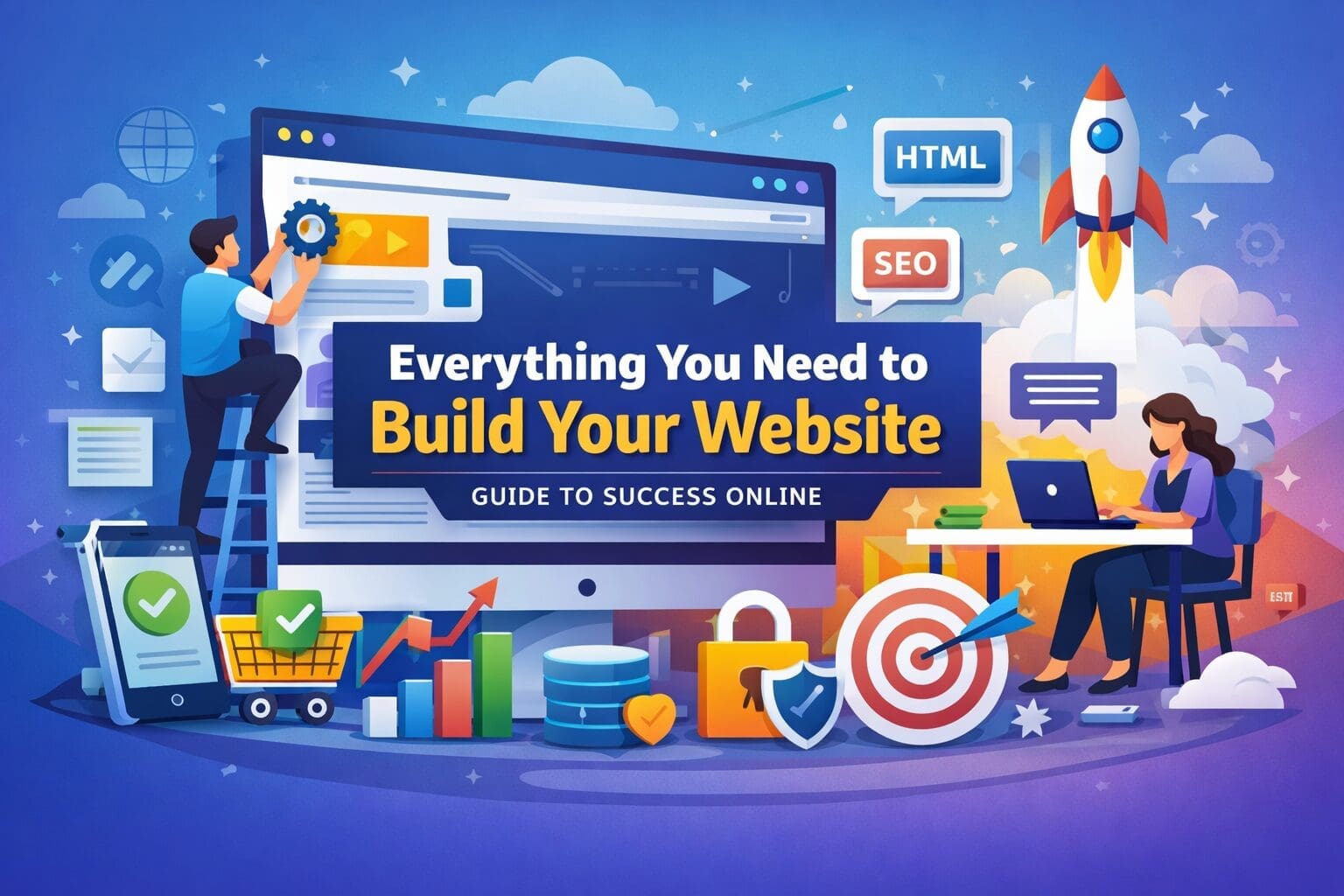
Building a successful website requires more than just selecting a template and publishing a few pages. A high-performing website is built on strategy, design, technology, and ongoing optimization. If you want your website to generate leads, increase sales, and strengthen your brand presence, you need a structured approach from the beginning.
Table of Contents
1. Start With a Clear Strategy
Before choosing tools or designing pages, you need complete clarity about your website’s purpose. Begin by defining the main goal of your website — whether it is generating leads, driving sales, increasing bookings, or building brand awareness. This primary objective should guide every decision you make throughout the development process.
It is equally important to identify your target audience. Understanding their needs, preferences, and challenges allows you to create messaging and design that truly connects with them. You should also clearly define the problems your business solves and how your website will communicate those solutions effectively. Finally, determine the specific action you want visitors to take, such as contacting you, requesting a quote, making a purchase, or subscribing to updates. A website without a clear strategy is like a shop without a signboard — it exists but fails to attract and guide customers properly.
2. Choose the Right Domain and Hosting
Your domain name represents your brand online. It should be simple, memorable, and relevant to your business. A professional domain builds credibility and makes it easier for customers to find you.
Reliable web hosting is just as important. Fast loading speed, strong security, and minimal downtime are essential for maintaining a positive user experience. Poor hosting can lead to slow performance, which affects both user satisfaction and search engine rankings.
3. Select The Best Website Builder for Small Businesses
Choosing the right platform is one of the most important decisions you will make. The Best Website Builder for Small Businesses should offer flexibility, scalability, SEO-friendly features, and mobile responsiveness. Whether you choose WordPress, Shopify, or another platform, make sure it supports long-term growth and customization.
A strong website builder allows you to easily manage content, optimize pages for search engines, and integrate essential tools like payment gateways, email marketing software, and CRM systems.
4. Focus on Professional Web Design
Professional Web Design plays a crucial role in how users perceive your business. A clean, modern, and user-friendly design builds trust and encourages visitors to stay longer on your site.
Your website must be mobile-responsive, ensuring it works seamlessly across smartphones, tablets, and desktops. Navigation should be simple and intuitive so users can quickly find what they are looking for. Strong visual hierarchy, clear headings, and well-placed calls-to-action guide visitors toward taking the next step.
Fast loading speed is also critical. A slow website can cause users to leave before exploring your services.
5. Create High-Quality Content
Content is the foundation of your website. It communicates your value, builds credibility, and helps improve search engine rankings. Your website should include a compelling homepage, detailed service or product pages, an engaging About page, and a clear Contact page.
Content should focus on benefits rather than just features. Speak directly to your audience’s pain points and explain how your business provides solutions. Regular blog posts can further boost visibility and position you as an authority in your industry.
6. Optimize for SEO
Search Engine Optimization ensures your website is visible on Google and other search engines. This includes proper keyword usage, optimized headings, meta descriptions, image alt text, internal linking, and fast performance.
SEO is not a one-time task but an ongoing process. With proper optimization, your website can attract consistent organic traffic without relying heavily on paid advertising.
7. Ensure Security and Maintenance
Website security protects your business and customer data. Installing an SSL certificate, using strong passwords, updating plugins, and performing regular backups are essential steps.
Ongoing maintenance ensures your website remains functional, secure, and optimized. Regular updates prevent technical issues and improve performance over time.
8. Track Performance and Improve
To grow your website effectively, you must track its performance. Analytics tools help you understand visitor behavior, traffic sources, and conversion rates. By analyzing data, you can make informed decisions and continuously improve user experience and results.
Conclusion
Building a successful website involves strategy, technology, design, content, and ongoing optimization. From selecting The Best Website Builder for Small Businesses to implementing professional Web Design and SEO strategies, every step contributes to your online success.
If you want a website that not only looks professional but also delivers measurable results, working with experts can make a significant difference. Auxilium Technology specializes in creating scalable, high-performance websites tailored to business goals. With the right strategy and professional support, your website can become a powerful tool for growth and long-term success.